

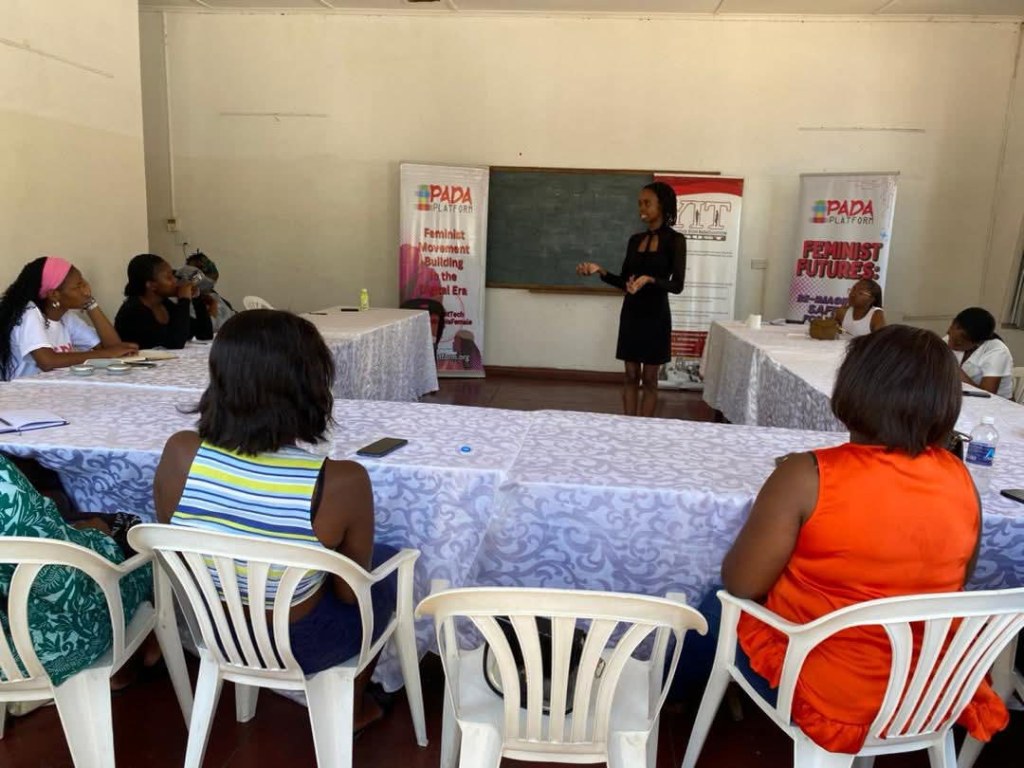
In commemoration of the 16 Days of Activism Against Gender-Based Violence, Youths for Innovation Trust (YIT) partnered with the PADA Platform to bring together a vibrant network of young feminists at the Bulawayo Art Gallery. The gathering created a critical moment for young women to reflect on their digital safety, share lived experiences, and collectively imagine safer online futures. The training, facilitated by Thando Gwinji a gender champion, opened space for honest conversations about the realities young women face in digital spaces. Participants expressed deep concern that their experiences of harassment, intimidation, and sexualized abuse online are often brushed aside as “not real” or “not serious” even though the emotional, reputational, and psychological impacts are significant.
Despite these challenges, the room was filled with determination rather than resignation. The young women who participated charted several strategies to counter online violence and strengthen their digital resilience:
- Raising awareness about TFGBV in their communities to break the silence that often surrounds digital abuse.
- Leading by example as feminist digital citizens and using their platforms responsibly, sharing empowering content, and calling out online violence when they see it.
- Building a culture of evidence tracing, including saving screenshots, timestamps, and other forms of documentation that can support advocacy and potential legal reforms.
- Centering feminist care and collective wellbeing, emphasizing that digital safety is not only technical but also emotional and communal.
The workshop also shifted the conversation beyond self-defense toward participation in shaping digital spaces. Participants reflected on how the internet is not neutral and its platforms and policies often mirror offline patriarchal dynamics. They discussed the importance of young women becoming part of the communities that write platform guidelines, influence tech governance, and develop feminist digital tools. Skills like coding, digital literacy, and ethical tech design were highlighted as long-term pathways to reclaiming power online.
Ultimately, the Bulawayo gathering did more than build skills. It reaffirmed a collective truth: young women are not passive recipients of digital harm. They are thinkers, creators, and activists actively shaping a future where online spaces reflect safety, dignity, and justice. Their message was clear and powerful: awareness, documentation, solidarity, and feminist leadership are essential ingredients for transforming digital spaces into places of empowerment rather than harm.

 Youth For Innovation Trust